





How to Choose Ayurvedic Products: A Buyer's Guide
Not all Ayurvedic medicine meets the same quality standard. The global market for Ayurvedic products has grown rapidly, and with it the risk of mislabeled, adulterated, or poorly manufactured products reaching consumers. This guide gives you a practical, category-by-category framework for evaluating authenticity, reading labels, and choosing Ayurvedic herbal supplements and personal care products with genuine confidence.

What "Ayurvedic Product" Means
Ayurvedic products fall into three distinct categories: herbal ingestibles (tablets and capsules), topical personal care (oils, creams, toothpastes), and Ayurvedic foods (ghee, herbal tonics). Each category is governed differently, with different labeling requirements and quality signals. Topicals are not supplements - do not apply supplement quality criteria to a personal care product.
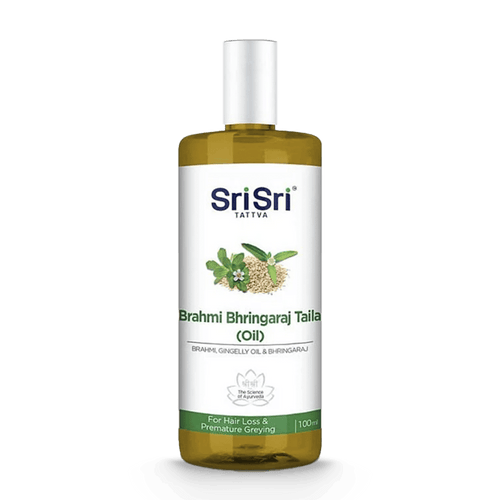
Knowing which category you are evaluating helps you ask the right questions. Examples include Ashwagandha tablets (herbal ingestible), Brahmi Bhringraj Hair Oil (topical), and Golden Monkey Ghee (food).
Reading the Label Correctly
For herbal ingestibles, the Latin binomial name alongside the common herb name confirms botanical identity and reduces adulteration risk: Withania somnifera for Ashwagandha, Bacopa monnieri for Brahmi.
A complete ingredient list including all excipients, binders, and fillers indicates manufacturer transparency. GMP certification confirms verified manufacturing standards. Organic certification confirms pesticide-free sourcing.
Shorter, clearly named ingredient lists are preferable over labels dense with unidentified additives or unlabeled carrier compounds that obscure what is actually in the product.
GMP Certification and Why It Matters
GMP (Good Manufacturing Practice) certification confirms a product was manufactured in a facility meeting verified safety, consistency, and quality standards. GMP-certified facilities follow documented processes for ingredient handling, testing, and batch consistency.
Beyond the GMP baseline, heavy-metal testing verifies the finished product is free from lead, mercury, arsenic, and cadmium. These two marks are the clearest quality signals available to a consumer without laboratory access. Look for both on product labels or brand websites before purchasing.
Whole-Herb vs Standardized Extracts
Standardized extracts isolate and concentrate specific active compounds for clinical precision and consistent dosing. Whole-herb formulations preserve the full compound profile, with multiple active constituents working synergistically as the plant provides them.
|
Dimension |
Whole-Herb Formulation |
Standardized Extract |
|
Compound profile |
Full spectrum, as found in the plant |
Isolated, concentrated actives |
|
Dosing |
Traditional, food-like |
Clinically precise and consistent |
|
Guiding principle |
Rasayana synergy, holistic balance |
Targeted, single-compound effect |
|
Best for |
Those favoring classical tradition |
Those wanting measured dosing |
Ayurvedic tradition favors the whole-herb approach, grounded in Rasayana philosophy: the belief that the herb's full complexity supports the body holistically. This is a deliberate traditional choice, not a lesser alternative. Neither approach is universally superior - the right choice depends on your wellness goals and relationship to Ayurvedic tradition.
Choosing by Wellness Goal
A goal-based framework simplifies selection across a multi-category catalog:
-
Immunity support: look for multi-herb formulations featuring herbs traditionally associated with supporting the body's natural defenses.
-
Digestion: Triphala is traditionally used in Ayurveda to support healthy digestion and elimination.
-
Stress and focus: adaptogenic herbs such as Ashwagandha and Brahmi, found in the stress and adaptogen collection, are traditionally used to support a healthy stress response and cognitive clarity.
-
Hair and skin: evaluate topical products as personal care, judging them by ingredient transparency and manufacturing standards; see our Ayurvedic hair type guide.
Sourcing and Traceability
Where an herb is grown, and how it is cultivated, directly affects the quality of the final product. Organically farmed herbs from named growing regions offer greater traceability than herbs from undisclosed commodity suppliers. Own-farm sourcing, where a brand controls cultivation through manufacturing, eliminates supply chain risks and allows quality verification at every stage.
Look for sourcing transparency on the brand's website: named regions, organic farming practices, and harvesting methods. Traceability is a meaningful differentiator that most labels do not prominently communicate to consumers.
Buying Ayurvedic Products Online
A few checks protect you when buying online:
-
Buy directly from the brand's official website to eliminate unauthorized reseller risk.
-
When purchasing through third-party retailers, confirm the seller is an authorized distributor.
-
Be cautious of significantly discounted products, since sharp price reductions can indicate counterfeit or expired inventory.
-
Favor brands with published quality marks (GMP, organic, heavy-metal tested) on their official site.
-
Avoid products claiming instant or miraculous results; Ayurveda works gradually and cumulatively, and such claims are inconsistent with Ayurvedic tradition and regulatory compliance.
Sri Sri Tattva's Quality Standard
Sri Sri Tattva meets the criteria this guide has outlined. Its formulations follow the whole-herb approach described above - a deliberate Rasayana-rooted choice rather than a standardized-extract model - preserving each herb's full compound profile. Herbs are grown on the brand's own farms in India, free from chemical pesticides, providing fully traceable sourcing from cultivation through manufacturing.
Products are GMP-certified, clinically tested, and heavy-metal tested for purity. The catalog spans all three categories - herbal ingestibles, topical personal care, and Ayurvedic foods - with quality claims appropriate to each.
Sri Sri Tattva brings over 35 years of Ayurvedic heritage and directs 100% of net profits to humanitarian programs, including SKY Schools and Project Welcome Home Troops.

What Authentic Labels Don't Say
Authentic, compliant Ayurvedic products use structure/function language - "may support," "traditionally used to" - not "treats," "cures," or "prevents." Claiming to treat or prevent a named disease is unlawful under US FDA guidelines.
Look for this disclaimer on any herbal ingestible: "These statements have not been evaluated by the Food and Drug Administration. This product is not intended to diagnose, treat, cure, or prevent any disease." Its absence is a red flag.
Claims of "miracle herb" or "instant results" conflict with Ayurvedic philosophy and regulatory requirements.
The Role of Doshas in Product Selection
Ayurveda recognizes that individuals have unique constitutional types - Vata, Pitta, or Kapha dominant - and that product selection can be informed by this prakriti (constitution). Some formulations are designed to support specific dosha balance, and product descriptions often indicate this.
Dosha-based selection is not mandatory for general wellness products but adds personalization aligned with classical Ayurvedic principles. For those with specific health concerns or wanting tailored guidance, a consultation with a certified Ayurvedic practitioner is the most reliable path.
Ayurvedic Medicine for Stress and Energy
Ashwagandha is among the most widely researched Ayurvedic adaptogens, traditionally used to support a healthy stress response and sustained energy. Brahmi is traditionally used to support cognitive focus and mental clarity.
Ayurvedic medicine for stress and Ayurvedic energy supplements typically feature these two herbs, alone or in combination. They work cumulatively: consistent daily use over several weeks supports their adaptogenic benefit. As a category, they may support a healthy stress response and sustained vitality as part of a balanced lifestyle.
Key Takeaways
Authentic Ayurvedic medicine is defined by sourcing transparency, verified manufacturing standards, traditional formulation principles, and honest labeling. GMP certification, organic sourcing, heavy-metal testing, and traceable supply chains are the clearest quality signals available.
Understanding whether a product is an ingestible, topical, or food simplifies evaluation. Whole-herb tradition and dosha-aligned selection add depth for those who want to engage Ayurveda more fully. Apply these criteria and you will know how to choose Ayurvedic products that genuinely reflect the tradition.